The Future of Biopharmaceuticals: Trends and Innovations

The biopharmaceutical industry is undergoing a transformative phase, driven by cutting-edge pharmaceutical technology and the evolving demands of global healthcare. Unlike traditional pharmaceuticals, biopharmaceuticals are derived from living organisms, enabling treatments for previously untreatable diseases and personalized therapies. This evolution is reshaping the pharmaceutical industry, offering opportunities for innovation, efficiency, and patient-centric solutions.

In this blog, we explore emerging trends, technological advancements, and real-world case studies highlighting how biopharmaceuticals are shaping the future of medicine.

Key Trends in Biopharmaceuticals

1. Personalized Medicine and Targeted Therapies

One of the most significant shifts in the evolution of the pharmaceutical industry is the move toward personalized medicine. Biopharmaceuticals allow for therapies tailored to a patient’s genetic profile, improving treatment efficacy and reducing adverse effects. Techniques like CRISPR gene editing and monoclonal antibodies are at the forefront of this innovation.

2. Advanced Drug Delivery Systems

Innovations in drug delivery technologies, such as nano-carriers, liposomes, and long-acting injectables, are enabling better bioavailability and controlled release of biopharmaceuticals. These pharmaceutical technologies enhance patient compliance and therapeutic outcomes.

3. Integration of AI and Machine Learning

Artificial intelligence is playing a crucial role in accelerating drug discovery and development. Machine learning algorithms analyse vast datasets to identify potential targets, predict efficacy, and optimize clinical trials. This integration is reducing the time and cost of bringing new biopharmaceuticals to market.

Case Study: Moderna’s mRNA Platform

A prime example of innovation in biopharmaceuticals is Moderna’s development of its mRNA-based COVID-19 vaccine. Leveraging advanced pharmaceutical technology, Moderna was able to design, test, and deploy a vaccine in record time. The company’s platform demonstrates the evolution of the pharmaceutical industry from traditional chemical-based drugs to biologics, showcasing agility, rapid prototyping, and scalable manufacturing.

Moderna’s success highlights several key trends:

  • Utilization of cutting-edge molecular biology techniques.
  • Rapid development cycles enabled by digital technologies and AI.
  • Scalable bio-manufacturing solutions for global distribution.

The Future of Biopharmaceuticals: Trends and Innovations

1. Cell and Gene Therapies

Cellular therapies, including CAR-T and stem cell-based treatments, are opening new avenues for treating cancer and genetic disorders. Gene therapies are addressing the causes of diseases, moving beyond symptom management to potential cures.

2. Bioprocessing Automation

Automation in bioprocessing facilities increases efficiency, reduces errors, and ensures consistent quality. Robotic systems, real-time sensors, and predictive analytics streamline production and quality control in modern biopharmaceutical manufacturing.

3. Sustainable Bio-manufacturing

Environmental concerns are pushing the industry toward greener practices. Companies are implementing energy-efficient processes, reducing water consumption, and optimising waste management to produce biopharmaceuticals sustainably.

The Future Outlook

The evolution of the pharmaceutical industry indicates a future where biopharmaceuticals dominate the market. Key predictions include:

  • Increased adoption of personalized and precision medicine.
  • Greater reliance on AI-driven research and development.
  • Expansion of cell and gene therapy pipelines.
  • Growth of sustainable, modular, and automated manufacturing facilities.

The convergence of these trends is expected to enhance treatment efficacy, reduce development timelines, and democratise access to advanced therapies globally.

Conclusion

The future of biopharmaceuticals is bright, fuelled by continuous innovations in pharmaceutical technology and the ongoing evolution of the pharmaceutical industry. From personalized therapies to automated bio manufacturing, these advancements are transforming patient care and redefining what is possible in medicine.

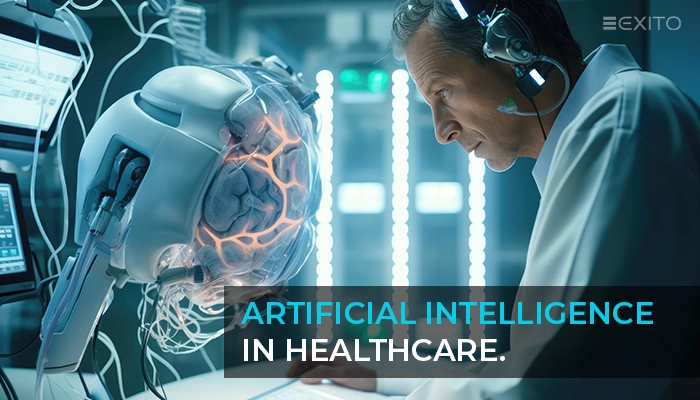
 Artificial Intelligence in Healthcare: 7 Ways it’s Revolutionizing the Industry 

Introduction:

In today’s rapidly evolving era of healthcare, the integration of Artificial Intelligence in healthcare processes has become a vital part, that it is capable of reshaping the Medical Industry. To give you a clear picture, a future where administrative tasks seamlessly fade away, diagnosis of diseases becomes more accurate, and the discovery of effective drugs accelerates at a pace faster than ever before.

This is artificial intelligence! The use of AI in the medical field is not just mere fiction, but it’s an invention that will revolutionize healthcare in the days to come.

Here are 5 ways to revolution the Healthcare Industry with AI

 Reduced Administrative Burden: 

Healthcare professionals are always in dire need of an assistant that can help with all the mountain-like pile of paperwork and administrative tasks. That’s where generative AI and other relevant AI tools like virtual agents and Chatbots come into the picture by streamlining administrative processes such as scheduling, referral management, and test authorizations. This not only reduces time consumption but also contributes to better patient care.

 Augmented Decision Support: 

In the complex world of Medical Diagnosis and Treatment, AI truly serves as an ally, constantly providing decision support to frontline Healthcare professionals. Through Machine Learning algorithms and advanced Healthcare Analytics, AI has proved to be able to analyze vast amounts of patient data, enabling professionals to obtain evidence-based data that is accurate and precise. In this way, the cognitive load of the professionals decreases while simultaneously improving the Diagnosis and Treatment of ailments.

 Smart Health Records: 

The Digitization of health records is an area where Medical AI excels. Data management in healthcare can be a hassle and to tackle that very obstacle, Machine Learning algorithms are stepping in. It addresses these algorithms by automating document classification and the tedious data entry processes. Through AI-powered solutions like Google’s Cloud Vision API and MIT’s smart health records, data management is no more a task but a quick execution, which is achieved solely through the smart practices incorporated by artificial intelligence in healthcare.

 Precision Analytics for Pathology Images: 

Without pathology, in-depth healthcare diagnostics would not be possible. It’s the pathology results that influence the vast majority of clinical decisions.

Artificial intelligence-driven analytics are revolutionizing pathology by impacting a diverse set of clinical decisions. It ensures precise analysis of digital images even at the pixel level, that is what emerging technology can do!

Such in-depth analysis is what allows the identification of even the slightest of nuances that may disrupt the human eyes, that eventually results in accurate diagnoses and personalized treatment techniques.

Moreover, AI makes it extremely seamless by pre-screening slides and shifting the focus of the pathologist’s to areas that require immediate attention.

 Drug Discovery and Development: 

The process of drug discovery, predicting drug efficacy, and navigating the entire approval process is undoubtedly challenging. However, medical AI has revolutionized this journey.

By analyzing vast patient datasets and Genetic information, Artificial Intelligence can seamlessly identify potential drug targets with higher success rates compared to those of the traditional methods. Researchers can easily pinpoint specific Biological molecules that prove to be a cause of disease development.

This not only improves the drug discovery process but also reduces unnecessary costs associated with healthcare, for patients across the world.

 Patient Experience: 

Emerging technology in healthcare has extended beyond optimizing processes —It immensely enhances Customer Experience. AI-driven solutions offer the most seamless and Effective journey for patients, from scheduling appointments to planning treatments, providing an end-to-end support system.

I believe we can all agree when we say appointment scheduling is a source of frustration for many, but with AI-powered systems, this task has been streamlined. These systems take into account factors like patient preferences, provider availability, and clinic resources, thereby reducing waiting time and improving overall satisfaction.

The smart AI chatbots improve engagement and empowerment by being accessible 24/7, addressing patient inquiries, offering medical guidance, and providing support based on medical records and clinical guidelines. This uplifts any burden on healthcare providers and enables patients to make informed decisions on time.

 AI Governance in Healthcare: 

As AI becomes prevalent in clinical settings, establishing governance is crucial to ensure ethical use and patient safety. Issues like bias, transparency, privacy, and liability require attention and cannot be ignored.

Laura Craft, VP Analyst at Gardner, stresses the need for common rules and guidelines. The World Health Organization (WHO) addresses these concerns in its “Ethics & Governance of Artificial Intelligence for Health” report.

The report outlines six principles:

1. Protecting autonomy

2. Promoting human safety

3. Ensuring transparency

4. Fostering accountability

5. Ensuring equity

6. Promoting sustainable tools

In summary, AI enhances patient experience through streamlined processes and personalized care. However, medical AI should co-exist with ethical and regulatory considerations. Because advanced healthcare practices should be delivered only while upholding patient safety and rights.

Conclusion:

The integration of Artificial Intelligence (AI) in healthcare, leveraging generative AI, machine learning, and healthcare analytics, represents a transformative force in the medical field. This emerging technology holds the promise of giving healthcare operations a new face by reducing mundane administrative burdens to enhancing decision support for medical professionals.

However, as AI continues to expand its footprint in the medical landscape, ethical considerations and governance frameworks, such as those outlined by the World Health Organization.
Overcoming the Key Supply Chain Challenges in the Indian Pharma Landscape

The Indian pharma domain in 2021 has observed rapid growth, especially over the last decade. This pattern is likely to continue in the future and looks bright and promising too..

When it comes to the number of drug manufacturing sites approved by the FDA, India is not very far from the United States. However, the trajectory of any industry’s growth is never devoid of challenges. The idea is to identify the gap between strategy and reality while trying out new ways to bridge it. Pharmaceutical companies based in India face supply chain challenges that make it difficult to sustain development. Companies need to formulate flexible, responsive, and adaptive supply chains by focusing on the following areas to tackle this aspect.

  1. Bringing Down Complexities

‘Complex’ is perhaps the best word to describe the current scenario of the Indian pharmaceutical supply chain. For actionable and immediate results, strategists need to focus on simplifying things. The first step is to consolidate and optimise the entire network to support seamless communication across all the parties involved in the supply chain. The next step involves tailoring the supply chain’s visibility along with the segmentation of the customers and markets.

This factor is important to achieve efficient outcomes. Lastly, it is crucial to handle both the upstream and downstream complexities of R&D portfolios and product SKU proliferation. This approach not only optimizes capacity but also helps cut costs.

  1. Boosting Visibility and Agility

As the needs of patients and disease patterns see a shift, the world market is witnessing frequent disease outbreaks and drug shortages. Reacting quickly to these changes is a key requirement to be a top-notch player in the industry. The most obvious example off late is the COVID-19 pandemic, which took the world by surprise. To accomplish the required agility to overcome such unforeseen circumstances, companies need to make sure that the supply chain is well integrated with the sales and operations processes. If they streamline their S&OP processes, not only will their service level go up, but their top-line also will witness sizable traction.

  1. Creating Reliable Quality Systems

Tight quality processes with proper internal and external oversight are the need of the hour. Building compliant and executable standard operating procedures and supporting them with proper compliance training can be the first phase. This phase can follow a strict quality-based culture right from the leadership and supported by appropriate documentation. These practices must be adhered to at all costs by everyone. Local and global audit companies can also conduct regular internal audits to ensure workplace protocols.

  1. Using “Transparent” Technology

Transparency in technology was and still is the most powerful approach for pharma companies to remain relevant. It often leads to systems that aid the top brass to make better decisions. Technology can also be leveraged to integrate various functions in the network, increase the overall visibility, and automate processes for a more efficient and robust pharmaceutical supply chain.

With the continuity of business depending on the sector’s willingness to leverage digital transformation, pharma companies need to be well-versed with digitized supply chains, data-driven insights, and hybrid cloud to remain competitive.

The virtual edition of Pharma IT Summit will foster meaningful discussions around the rampant challenges and best practices for the sector with engaging and active conversations.

Register for the Pharma IT Summit

Event by Exito Media Concepts